In November 2024, Jaguar embarked on a bold journey to redefine its identity and reshape its future. The luxury automaker unveiled a striking rebrand, signaling a commitment to sustainability and innovation with all-electric, ultra-luxury automobiles priced at $100k+ to shed outdated perceptions and attract wealthy young buyers. This move, aimed at repositioning Jaguar for a new generation, left loyalists divided and commentators stunned. Some applauded the audacity, while others mourned the departure from Jaguar’s legacy-rich history.
The question remains: did Jaguar’s rebrand work? Does it support its ambitious new business strategy?
So far, the data shows a tradeoff: equity is down in most segments, but parts of the funnel are moving in the right direction.
By analyzing proprietary data from BERA.ai—a global brand intelligence platform with always-on, census-matching data and brand-to-business analytics across more than 5,000 brands, including Jaguar—we move beyond emotion, opinion, and conjecture to uncover the real impact of Jaguar’s rebrand in the context of its new business strategy.
Jaguar’s Bold New Strategy
At the core of Jaguar’s new business strategy is an audacious pivot: becoming an all-electric car company aimed at a younger demographic—even if it means sacrificing a significant portion of its current, older customer base. Jaguar paused production as part of an intentional bridge period, and leadership expected backlash and predicted a steep sales collapse. This transformation reflects the automaker’s vision of “responsible modern luxury,” blending sustainability with high-end innovation. Whether you agree or disagree with this shift in strategy, Jaguar’s rebrand should be judged by how well it supports this change.
Jaguar’s Radical Rebrand
Implementing Jaguar’s bold new strategy raises a critical question: how to capture and connect with the hearts and minds of its target audience. For Jaguar, the answer was a radically different identity that was communicated through an unapologetic, high-impact rebrand.
This transformation draws on four key visual elements: a striking device symbol, a dramatic strikethrough motif, exuberant color palette, and a refreshed maker’s seal. It’s a deliberate effort to channel the spirit of founder Sir William Lyons’ philosophy to “Copy Nothing” while championing originality and artistic expression in every form.
The rebrand launched with a provocative 30-second video featuring high-fashion models and abstract visuals, while leaving any automobiles conspicuously absent. The taglines “Copy Nothing” and “Delete Ordinary” underscored the brand’s bold, and arguably abrupt, departure from tradition.
To reinforce the reset, Jaguar wiped its entire social media history at launch, signaling a clean break from the past and a bold leap into a redefined future.
What Does The Data Say?
Since its rebrand in November 2024, Jaguar’s brand equity has declined among households earning $100K or more, which is the traditional target audience for luxury automotive brands. However, Meaningfulness – the degree to which a brand is integrated into the personal life of a consumer – did see an increase during this time.
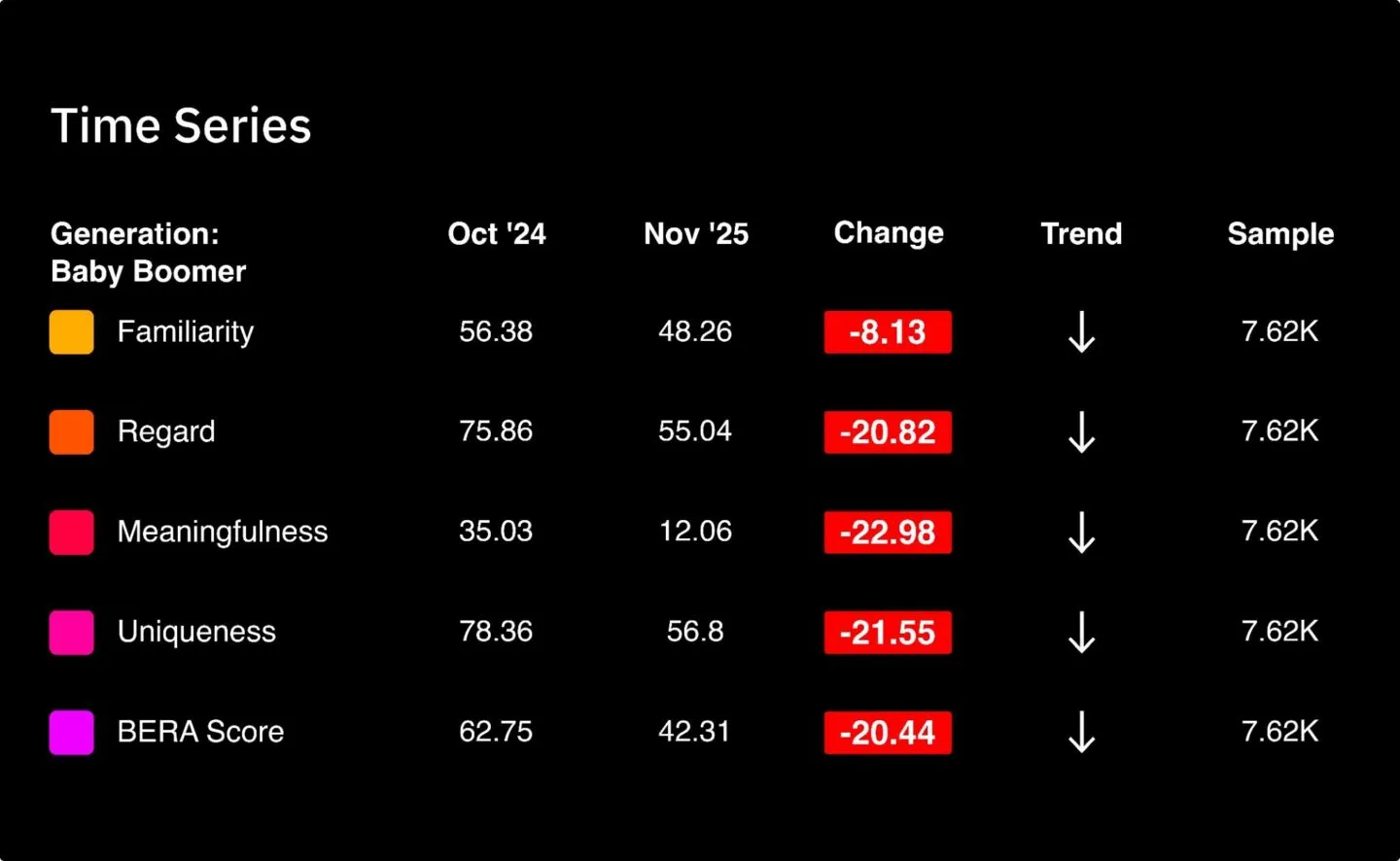
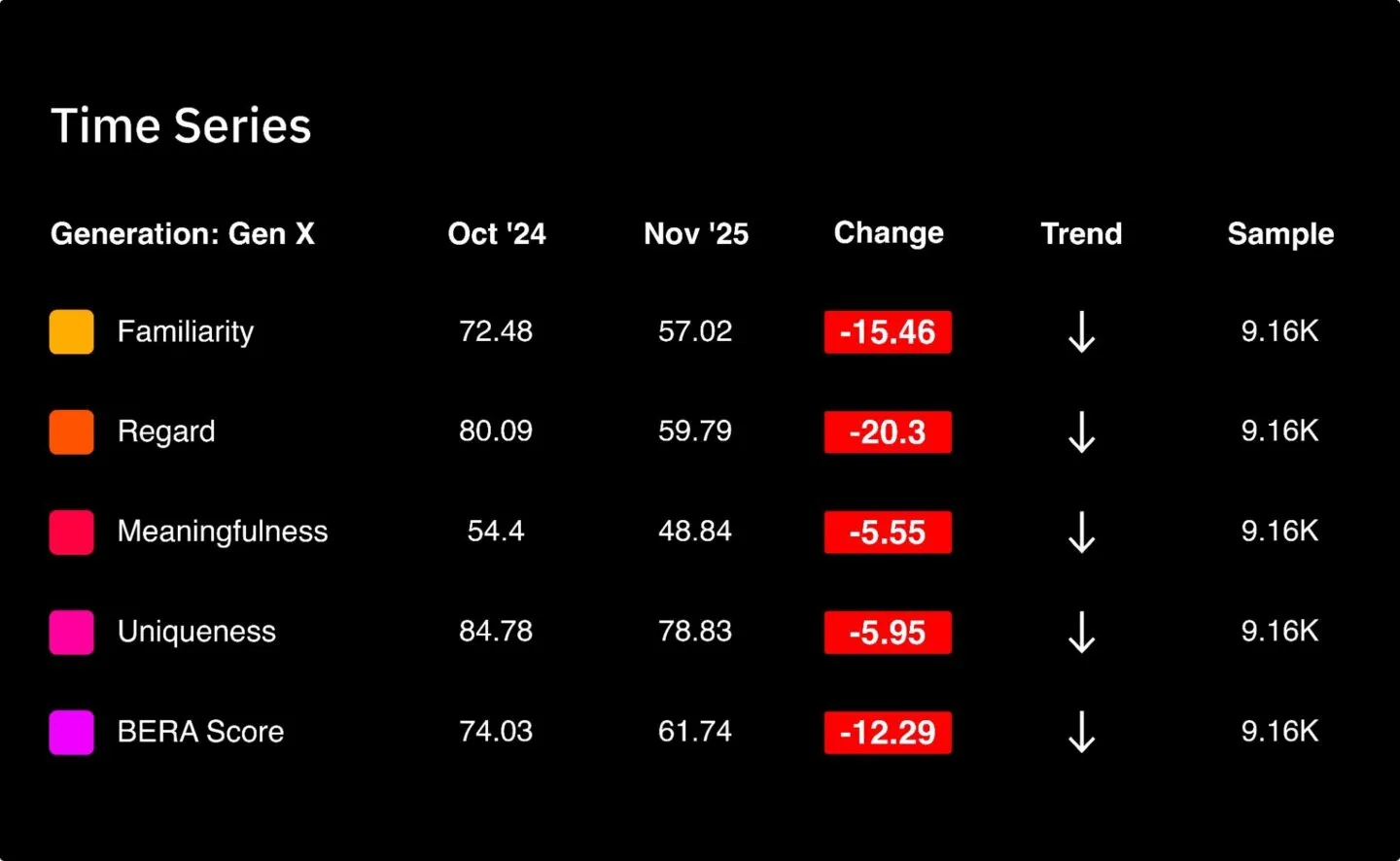
Moreover, Jaguar’s brand has significantly weakened among Boomers and Gen Xers, the generations that have historically made up its core customer base. In fact, every driver of brand equity among both generations dropped following the rebrand.
But What About Jaguar’s New Target Customer?
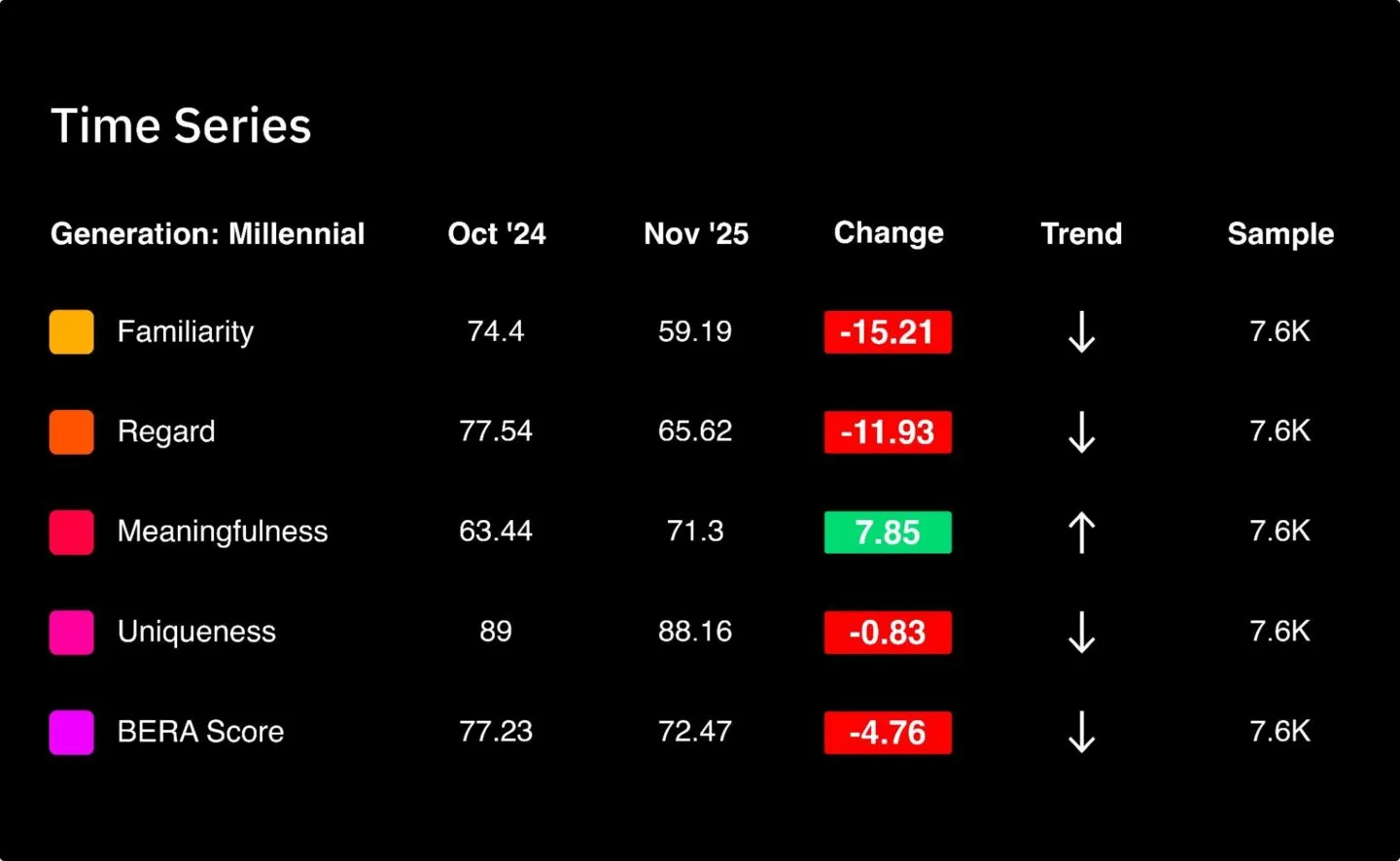
Jaguar’s new business strategy and rebrand are about winning over Millennials, not maintaining the status quo. Nevertheless, the data shows a mixed bag in that regard. Millennials are assigning Jaguar more meaning, but overall equity is not yet climbing because familiarity and regard are falling at the same time.
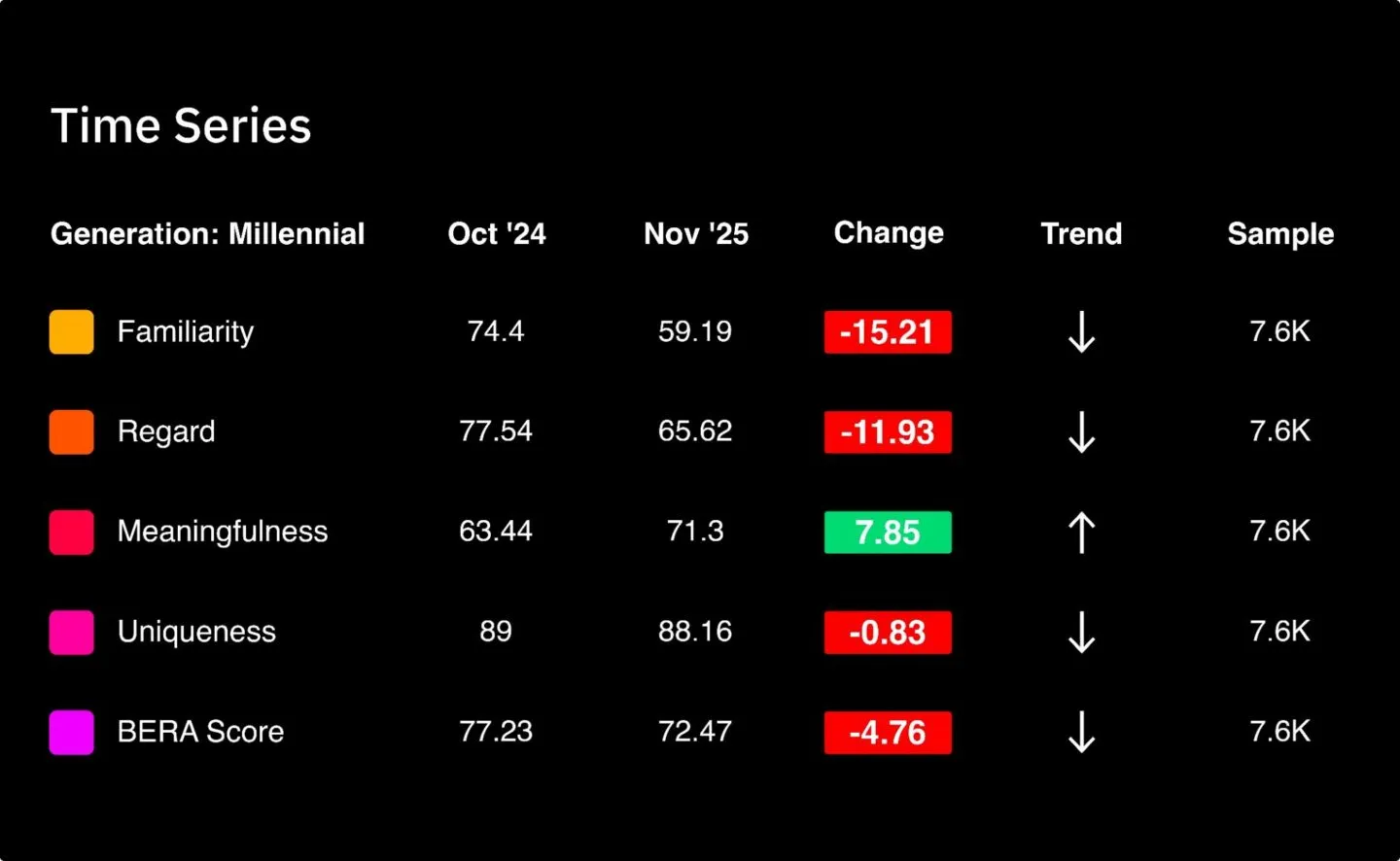
That tension shows up clearly in the funnel. Among Millennials, awareness is slipping, but the behaviors that actually matter are moving the other way. Consideration and usage are up, while preference and advocacy are both climbing. Fewer Millennials may have Jaguar top of mind right now, but those who do are leaning in harder. That pattern suggests the rebrand is not broadening reach yet, but it is deepening engagement with the right slice of the audience. In a reset phase with limited product availability, that’s a healthier signal than rising awareness paired with weak intent.
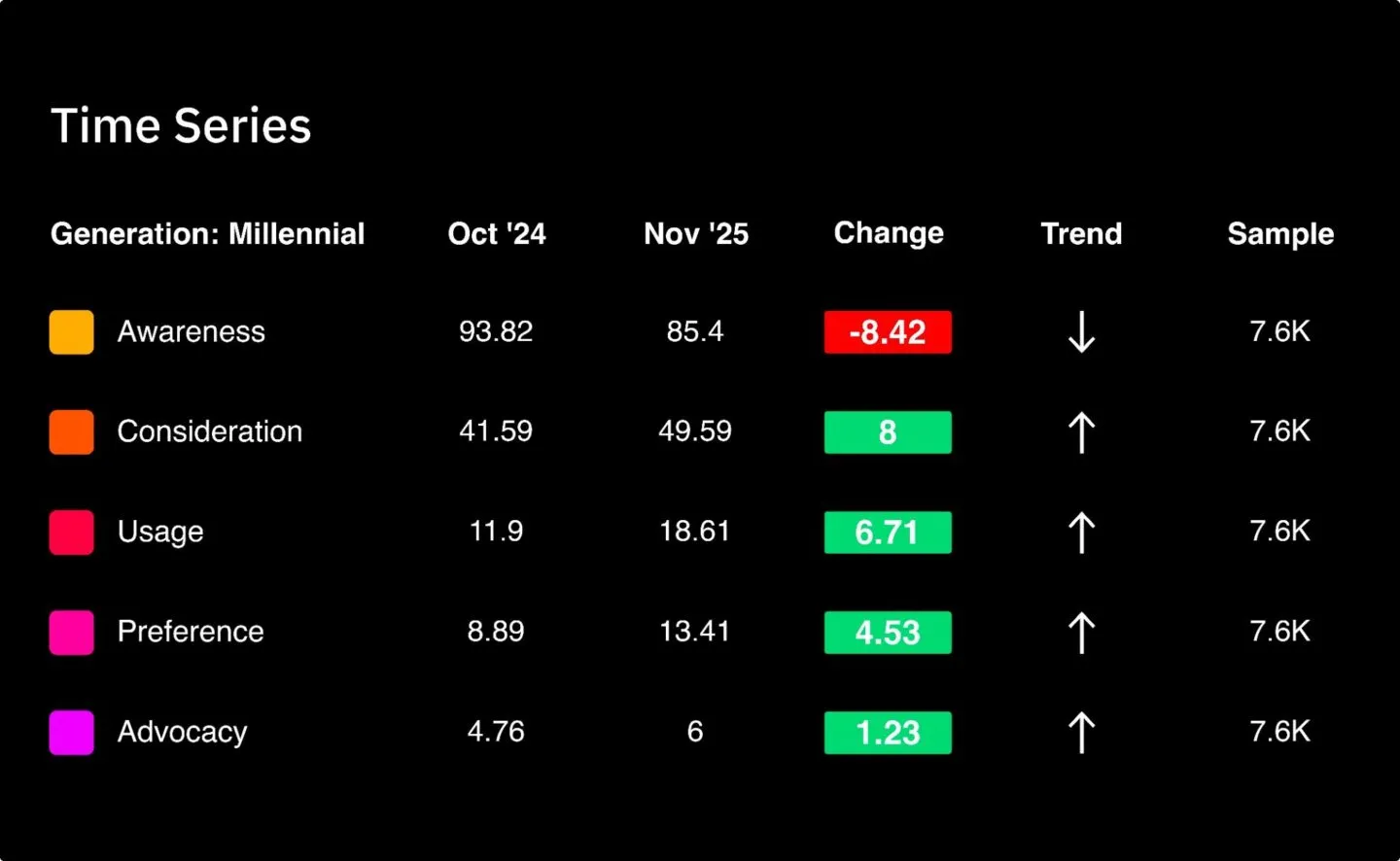
The rebrand is doing part of the job: it’s changing what people think Jaguar stands for and improving key funnel signals in high-income households and Millennials. But equity is down broadly, and the real test starts when the 2026 EVs hit the market.
Why The Blow Back?
When evaluating Jaguar’s rebrand, the right question is whether it effectively supports the company’s new business strategy, not whether that strategy is the right one for the company. Most so-called “expert” commentary misses this entirely. Their critiques tend to be rooted in personal taste (“Do I like the look and feel?”) rather than grounded in robust data to evaluate how well the rebrand is supporting Jaguar’s new strategy.
As for the backlash from Jaguar’s traditional audience—the older, wealthier demographic—the rebrand wasn’t designed for them. And frankly, resistance from a brand’s most loyal followers is a predictable response to change. When a product or cultural icon evolves, those most attached to the original version often react negatively. Familiarity breeds fondness; change stirs discomfort. That being said, Boomer disapproval might be an expected outcome, but it still shows up as measurable equity decline.
The only potentially valid critique is this: could Jaguar have reshaped its brand to attract younger buyers without losing so much ground with its traditional base? Possibly. But even that question assumes continuity was the goal. Jaguar intentionally paused production, accepting a steep and temporary sales collapse as the cost of resetting the brand for an all-electric future.
That reset is already generating early signals of demand, with more than 32,000 prospective buyers expressing interest in the upcoming EV lineup. When initial creative sparked backlash, Jaguar adjusted execution, changing agencies and firing chief designers without abandoning the strategy itself. Even leadership changes did not alter the plan. All of this suggests the rebrand is doing what it set out to do: create space for a fundamentally different Jaguar. The real test is not public reaction or short-term sales. It’s whether that early intent converts into sustained demand and pricing power when the new electric models launch in 2026.
Implications for Business Leaders, Marketers, and the Industry Commentary
At the end of the day, the most effective way to evaluate a brand strategy is by assessing how well it supports the underlying business strategy. And the only credible way to do that is through rigorous, high-quality brand data that’s connected to business outcomes.
For business leaders and marketers, this means grounding bold creative decisions in hard evidence. For industry pundits, it’s a reminder to move beyond surface-level commentary and dig into what the data is really telling us. Because in a world where brands are evolving faster than ever, clarity—not conjecture—is what separates noise from meaningful insight.
The right way to evaluate a rebrand like this is to separate short-term brand discomfort from long-term business intent. During a reset of this magnitude, it’s not only possible but likely that overall brand equity declines, especially among legacy audiences. That doesn’t automatically signal failure. What matters more is whether the funnel is strengthening in the priority segments Jaguar is betting on, particularly younger and higher-income buyers. Those leading indicators suggest whether the brand is earning permission to play in its intended future space.