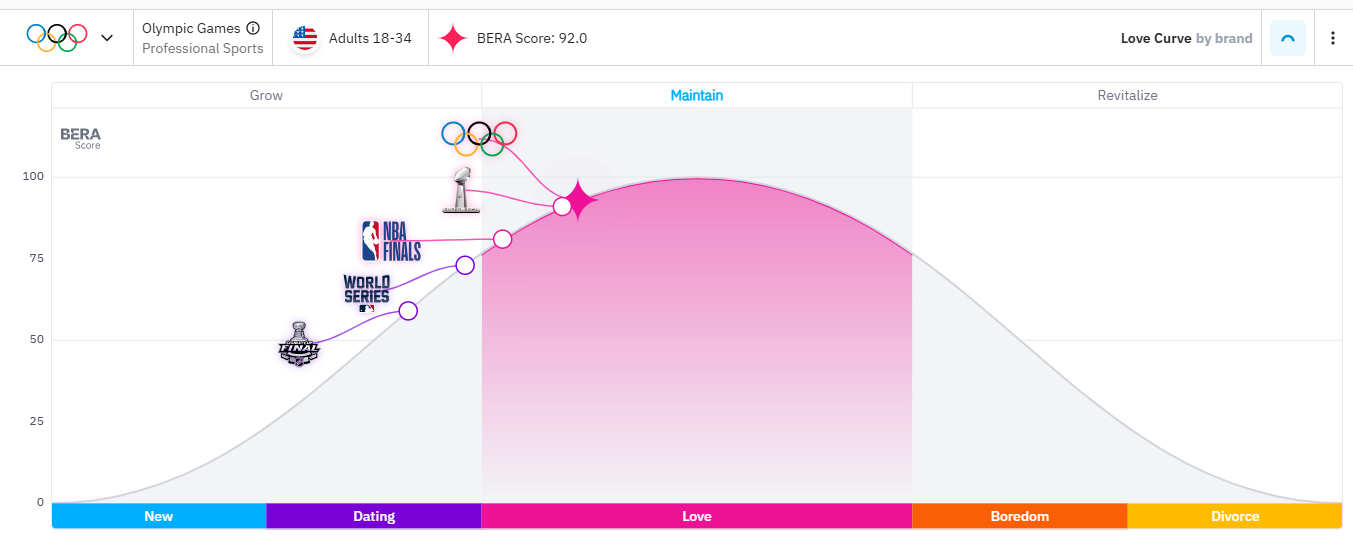
Olympic sponsorship comes with scale, cultural relevance, and visibility that few properties can match. According to BERA data, the Olympics rank as the most loved sporting event in the United States among adults 18-34, topping the Super Bowl, World Series, NBA Finals, Stanley Cup, and World Cup. That level of attention gives sponsors a strong starting point. The hard question is how to show true financial ROI from an Olympic sponsorship, which means proving that the investment moved the right perceptions with the right audience and connected that movement to business outcomes. Additionally, brands should consider how the sponsorship expands its impact beyond the core ROI mode by creating value through stronger media impact, deeper consumer connection, and employee pride.
BERA’s LA28 sponsorship research shows why that distinction matters. Consumers still see the Olympics as a powerful cultural platform, with 64% expressing interest in the Games and 80% saying the Olympics feel unique compared with other major sporting events. At the same time, sponsorship alone does not automatically move brand perceptions, consideration, or purchasing. Most consumers say Olympic sponsorship, LA cultural connection, or athlete endorsement would make them no more or less likely to consider a brand, while more than one-third say those factors would increase consideration when the activation feels relevant, useful, and authentic.
How Olympic sponsors can prove financial ROI
The financial case for Olympic sponsorships, which can run from $50 million to $200 million, starts before the activation goes live. A sponsorship only becomes measurable when the brand defines what success looks like, who it needs to reach, and how the investment is expected to translate into business value.
BERA’s sponsorship evaluation methodology starts with audience and reach. The first step is understanding who the sponsorship reaches, how large that audience is, and whether it includes the customer groups the brand needs to move. Reach matters most when it connects the brand to people who can be moved toward consideration, purchase, loyalty, or another valuable business behavior.
The next step is identifying the key drivers of brand equity. That means understanding which perceptions matter most for the brand and which ones the sponsorship is best positioned to influence. These perceptions create the conditions for business outcomes because they shape how people understand, choose, and spend with the brand.
The final step is taking those perceptions and linking them back to brand equity, which is in turn linked to business performance. BERA’s sponsorship evaluation approach ties movement in the right perceptions back to outcomes such as customer growth, share of wallet, revenue lift, brand value lift, and ROI. From there, a brand can see whether the sponsorship reached the right audience, moved the right perceptions, and created enough business value to justify the investment.
How the sponsorship comes to life matters
A strong sponsorship evaluation model gives marketers a clearer ceiling, a clearer break-even point, and a stronger basis for investment decisions before the Olympic spotlight arrives in Los Angeles. It can help answer how much a brand should be willing to spend, what level of perception change is needed, and what financial return is realistic based on the sponsorship’s reach and expected effectiveness.
The ability to extract maximum value from a partnership depends on how the sponsorship is brought to life in-market. For LA28 sponsors, that means the rights package is only the starting point. Creative, media mix, and marketing support influence how much value the brand can capture from the Games and how effectively the sponsorship moves the perceptions tied to business performance.