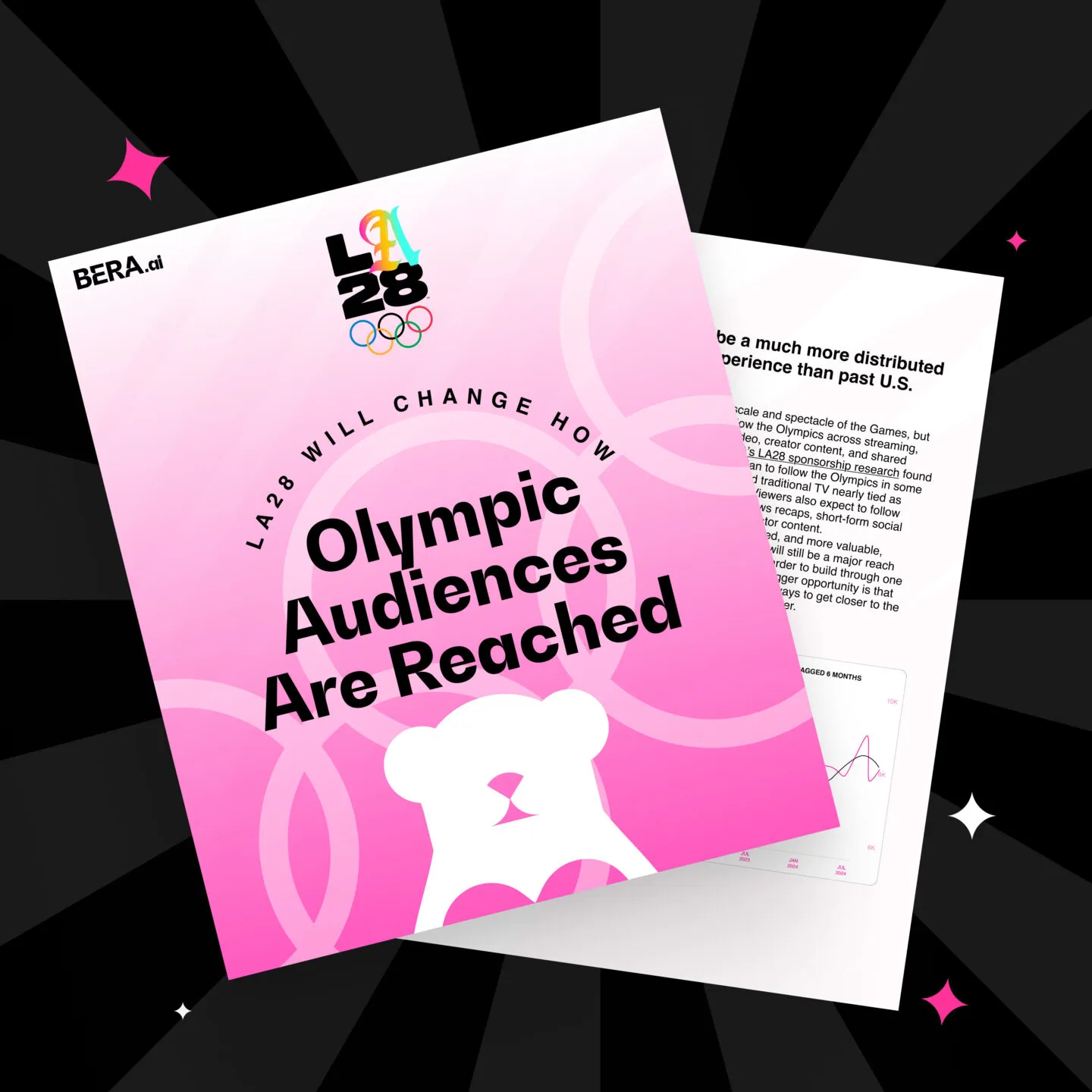
LA28 will be a much more distributed viewing experience than past U.S. Olympics. People still want the scale and spectacle of the Games, but they now expect to follow the Olympics across streaming, TV, highlights, social video, creator content, and shared viewing moments. BERA’s LA28 sponsorship research found that 77% of consumers plan to follow the Olympics in some way, with streaming TV and traditional TV nearly tied as primary viewing channels. Viewers also expect to follow through online highlights, news recaps, short-form social video, watch parties, and creator content.
That creates a more complicated, and more valuable, opportunity for sponsors. LA28 will still be a major reach moment, but that reach will be harder to build through one dominant viewing channel. The bigger opportunity is that fragmentation gives brands more ways to get closer to the stories that make the Olympics matter.
Someone may…
- watch an event in prime time
- catch highlights the next morning
- follow a creator behind the scenes
- share a clip
- join a watch party
- interact with a sponsor’s owned channel
and each of those touchpoints gives the brand a different way to add value, connect to a specific story, and build a clearer role in the Olympic experience.
The media model is fragmented
LA28 will be the first U.S. Summer Olympics built for a truly distributed media environment. During a recent panel at Cannes Lions, NBCUniversal’s Mark Marshall noted that the last Summer Olympics in the U.S. had 186 broadcast hours, while LA28 will feature closer to 8,000 hours of coverage. That scale requires every distribution method available and gives sponsors more ways to connect with audiences across the full Olympic experience.
The shift is about more than having more content in more places. Fragmentation makes broad reach more challenging, but it also opens the door to better storytelling. A brand can attach itself to a specific athlete journey, an underdog story, a niche sport, a creator-led moment, a local LA experience, or a theme that connects directly to the relationship the brand wants to build with consumers.
The strongest sponsorship strategies will treat broadcast, streaming, social, creator content, and owned channels as connected parts of the same brand story. Broadcast can still create scale, while social, creators, and owned channels can help the brand get closer to the moments, personalities, and themes that make the Olympics meaningful. The goal is to use each channel with intention, so the full media plan builds one clear role for the brand instead of spreading the message across disconnected touchpoints.
Match the channel to the brand association
BERA data adds useful context by helping marketers connect channel strategy to the brand outcome. A distributed media environment makes channel choice more strategic because each touchpoint can build a different association. For example, a brand that wants to come across as family-oriented may need moments built around shared viewing, athlete families, or community experiences, while a brand that wants to promote societal commitment may need stories tied to access, inclusion, underrepresented athletes, or local impact. The channel choice should follow the brand association the marketer is trying to strengthen.
BERA.ai helps the media team understand which channels are working and what associations they want to drive, and therefore they can make better media and content choices. By linking brand equity data with media investment and business outcomes, BERA.ai shows whether the channel mix is building the right perceptions and whether those shifts are translating into stronger consideration, engagement, or customer action. That makes the media plan more than a distribution map because it gives marketers a clearer way to build the specific brand meaning that will drive the greatest impact.